Rethinking what a petfood score should do
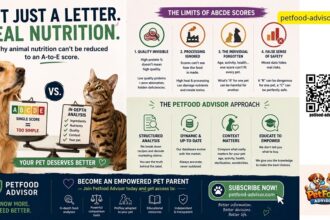
Pet owners are increasingly exposed to simplified rating systems that promise quick answers. Many platforms assign grades like A, B, C, D, or E to pet food products, suggesting that choosing the “best” option is as easy as picking the highest letter.
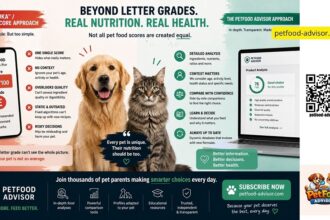
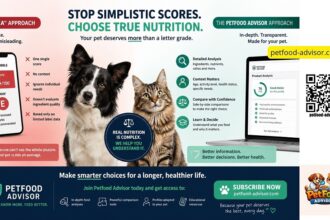
This approach is appealing, but it creates a false sense of certainty. Nutrition is not a one-size-fits-all concept, especially when it comes to dogs and cats. Each animal has unique needs shaped by age, breed, metabolism, health conditions, and lifestyle. A single letter cannot capture that complexity.
A more meaningful petfood score should not aim to rank products in a universal way. Instead, it should help owners understand what they are looking at, so they can make informed and context-aware decisions.
The hidden problems behind ABCDE scoring systems
There are now hundreds of petfood scoring systems online, many using similar A-to-E scales. At first glance, this abundance might suggest reliability. In reality, it highlights inconsistency.
Most of these systems rely on proprietary formulas that are rarely disclosed in detail. As a result, the same product can receive completely different ratings depending on the platform. This lack of standardization makes comparisons unreliable.
Another issue lies in oversimplified rules. Ingredients are often judged in isolation, without considering their quality, processing methods, or role within the full formulation. For example, certain components may be automatically penalized or rewarded based on generalized assumptions rather than nuanced analysis.
These scoring systems also ignore the individual animal. A formula that works well for one pet might be unsuitable for another, yet the assigned grade remains fixed. This disconnect can mislead owners into making decisions that are not aligned with their pet’s actual needs.
In some cases, these ratings even contribute to unnecessary anxiety. Alarmist interpretations of low scores can push owners to switch foods abruptly, which may disrupt digestion or create nutritional imbalances.
From scoring to understanding
A more responsible approach shifts the focus away from grading and toward education. Instead of telling owners what to choose, it equips them with the tools to evaluate options themselves.
This means breaking down key elements such as:
- Ingredient lists and their order of appearance
- Protein sources and their relevance
- Fat content and energy density
- Carbohydrate estimation and common misconceptions
- Additives and their functional roles
- Analytical constituents and what they actually indicate
By learning how to interpret these elements, pet owners gain autonomy. They are no longer dependent on a simplified rating but can assess whether a product aligns with their pet’s specific profile.
A more nuanced view of pet nutrition
Pet food is influenced by multiple factors, including manufacturing constraints, regulatory frameworks, and marketing strategies. Reducing all of this to a single grade ignores the broader context.
A more nuanced perspective acknowledges that no product is inherently “perfect” or “bad” in absolute terms. What matters is suitability. A food must be evaluated based on how well it fits a particular animal at a given time.
This approach also helps counter misinformation. Online discussions about pet food are often driven by strong opinions, fear-based claims, or oversimplified narratives. An analytical framework provides a more balanced way to navigate these conversations.
The role of a modern petfood score
A modern petfood score should act as a decision-support tool rather than a ranking system. Its purpose is to organize information, highlight key factors, and guide reflection.
In practical terms, this means:
- No universal grades or letters
- Clear explanations instead of verdicts
- Contextual interpretation rather than rigid classification
- Emphasis on learning rather than quick judgment
Such a tool does not replace professional advice, but it complements it by improving the owner’s understanding and engagement.
Conclusion
ABCDE petfood scores may seem convenient, but they often lack transparency, consistency, and relevance to individual needs. Their simplicity can be misleading, and in some cases, counterproductive.
A more effective approach focuses on education and analysis. By moving beyond ratings and toward informed decision-making, pet owners can choose food based on real understanding rather than arbitrary scores.